Friday, June 10, 2011

Masada Again


Masada is spectacular. Sitting on a hill above the Dead Sea, this site is probably one of the greatest building projects headed by King Herod. I don’t have a lot of new information to add from last year, but really have some wonderful images to share from the location.

Plus I didn’t want to waste pictures I got sick taking!

According to Josephus, a Roman historian, the Hasmonean King Alexander Janaeus built the original fortress at Masada. King Herod took over the location, and used it as a strategic refuge against his enemies and as a winter palace. Kind Herod had three different palaces built on Masada.

I learned during the siege on Masada, the Jews living there had gardens in addition to foods stored in the stock rooms. There was a tower that housed pigeons, not for the communication necessities, but more for their dung; this was used as fertilizer in the gardens. When the Romans broke into Masada, the Jews had burned most of the food, but left one stockroom full to show the Romans they could survive for a long time. The amounts of food were apparently impressive.


This is the columbarium tower; the lower floors housed pigeons and the upper floors were used as guard towers.


The Roman ramp is at the left of the picture.


The breach point.

King Herod had three different palaces at Masada. This is his Western Palace. King Herod had a personal bathhouse, throne room and a reception room with preserved mosaic floor.

His throne room


Last year I looked down on the other two levels of the Northern palace. This palace was built on three levels. The top level is where King Herod lived with his family. The bottom two levels were used as reception rooms, and were accessed on the west side by a flight of stairs (later destroyed during an earthquake).


Tuesday, June 7, 2011

Israel's Landscapes


The last four days my family and I have been on the go. I have had barely any time to really stop and process what I’ve seen. In addition to the traveling I was in the sun for way too long Saturday; if I have learned anything, it is to not mess with the sun in Israel. Sunday, our day in Jerusalem I was so sick. Diagnosis: either very mild heat stroke or dehydration. The good news is I have some great pictures from Masada; the bad news is I paid dearly for it. But from now on, especially while I am at my dig, I will be very careful with the sun. I don’t like repeating my mistakes.

Last year I meant to write a blog about the country of Israel. Sure, I did one about the history I learned in my class, but what about the landscape of the country? I think everyone who does not know thinks Israel is just a desert, but really the landscape is quite diverse.

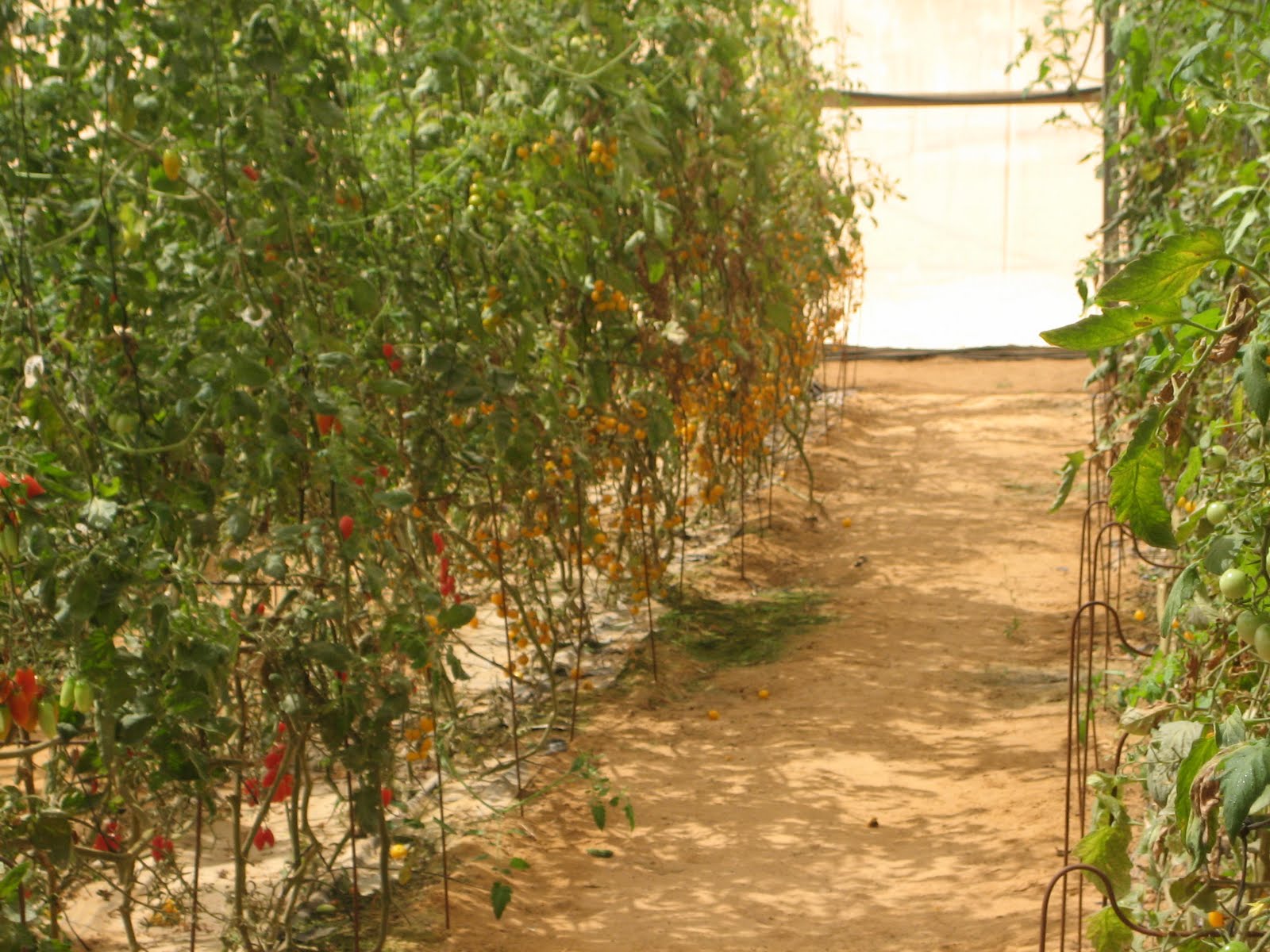
In the south lies the dry desert part of Israel. This is the hot part of the country. While the desert may not seem be as useful in other parts of the country, I learned last year the Israeli’s have developed ways to grow crops in the desert. Sand is apparently the perfect kind of soil because with some fertilization it can grow about any crop; the sand acts as a blank canvas. My group visited a kibutz growing carrots out of the sand, and tomatoes in green houses. Along the Dead Sea there are large areas of palm trees my parents helped identify as date farms.


My image of tomatoes growing in the sand

The south has beautiful sunrises and sunsets. Last year we got up so early to hike Masada I saw a beautiful sunset breaking over the desert. My mother went to school in the south, and she was very adamant about pointing out the changes in color through the day. It is a beautiful region.


Some of the agriculture on our way south


The diverse south

Jerusalem is located in the central hill county. These may not be high mountains, however the region is more mountainous than flat. In this region there are several forests growing, and it is very green and lush. Also dotting the countryside are several agricultural kibutz’s.


I must diverge to define what a kibutz is; for those who do not know a kibutz is a kind of community where every individual works for eight hours a day, and instead of earning a wage instead is given a home and supplies necessary for basic living. These places can manufacture items, or grow agricultural. These food items are used to feed the Israeli population, and some are even exported to Europe.

Going north the landscape becomes greener. In the Golan Heights around Passover the area is green and blooming with flowers. Much of this greenery has dried out by this time of the year, but there are still flowers growing, and some green is visible. This area is thickly grown with grasses and flowers, so it is easy to imagine the landscape being green in the spring.


Imagine going from these hills to this picture below in under ten minutes!


Close to Haifa there are valleys that are very fertile and serve as agricultural centers.


Finally, at Tel Dan, one of the most northern points in Israel, the area was not only green, but also wet. This location is where the Jordan River starts; these spring waters flow south to form the Jordan River. After being in the south three days ago, it was amazing to see springs coming from the ground and flowing along the path. Similarly, the constant sound of rushing water was delightful to hear.


As I drove around, I tried to capture some of the constant changes I witnessed outside my window through pictures. One minute we would be climbing a hill, the next we would be descending into a valley. As I took images of the city of Jerusalem, I looked east and was able to see the desert lying so close to a high green area. These changes are made more drastic because of the small geography in which they are happening.

Now readers, if you are paying attention you will notice I mention many interesting places in my post here: Jerusalem, the Dead Sea, Masada and Tel Dan to name a few. Be patient with me, because I plan to give each the time it deserves and research into the history of these locations. But for today, after returning from the north and seeing the scenery I have seen, this post seemed more appropriate before I continued with the history.

As I have been doing for this trip, enjoy the pictures I have taken. Be forgiving of these, because several were taken from the car, through the same window I view these lovely places from with my own eyes.

Friday, June 3, 2011

North to Haifa and Nazareth


I can only hope you have been at the edge of your seat to find out where I have gone next. I know I have been on the edge of my seat every day as I go around Israel and see what I see! Every place is beautiful and different. Going north out of Tel Aviv was no exception.

My father is Catholic, or rather he was raised Catholic. For this reason, the gesture was to take us to the Church of Annunciation in Nazareth. May I say, this was quite an outstanding place to visit because of how unique the church is.

The bottom level of the Church is the most holy place, called Mary’s Cave. It is here that according to tradition Mary was visited by the Archangel Gabriel and told she was destined to carry the Messiah in her womb.

The first church at this location was built in 427 A.D. by Jerusalem’s Deacon Conon. It included a small monastery to the south and the church was separated from the holy cave itself. This church stood for about 700 years until the church was almost completely destroyed (the payments Muslims required did not allow for necessary repairs to be made to the building).

When the Crusaders arrived they found the church destroyed, and rebuilt it. At this time the holy cave was located inside the church. This church seems never to have been completed, and was later destroyed completely. In 1620 the Franciscans were allowed to return to Nazareth where they have remained since.

The current building was established on 1969 and incorporated remains of the previous churches through the archaeological evidence behind the church. There was also evidence of how people lived at the time; a bread oven remains, along with a silo to collect water.


In addition to seeing the Church, we also stopped at the Baha’i Gardens. A man named Baha’u’llah founded the Baha’i religion in Iran in the 19th Century. The faith holds as its central belief the unity of mankind. Baha’u’llah’s son and successor built the gardens and shrine. Baha’i followers who volunteer there for one year meticulously keep the gardens. They are breathtakingly beautiful, and it was a treat to see them.

May I say as a side note one of the most interesting, and startling things about the trip into Nazareth was what a local taking us around said about it. Arabs mostly inhabit the town, which is fine. Originally Christian Arabs were the majority and it is the Christians who are willing to work with Israelis. But due to pressure from Muslim Arabs, they are slowly leaving and are being replaced by Muslim Arabs. I believe my picture may explain my concern.


Once again, enjoy pictures I took at both these sites!


Tuesday, May 31, 2011

Jaffa


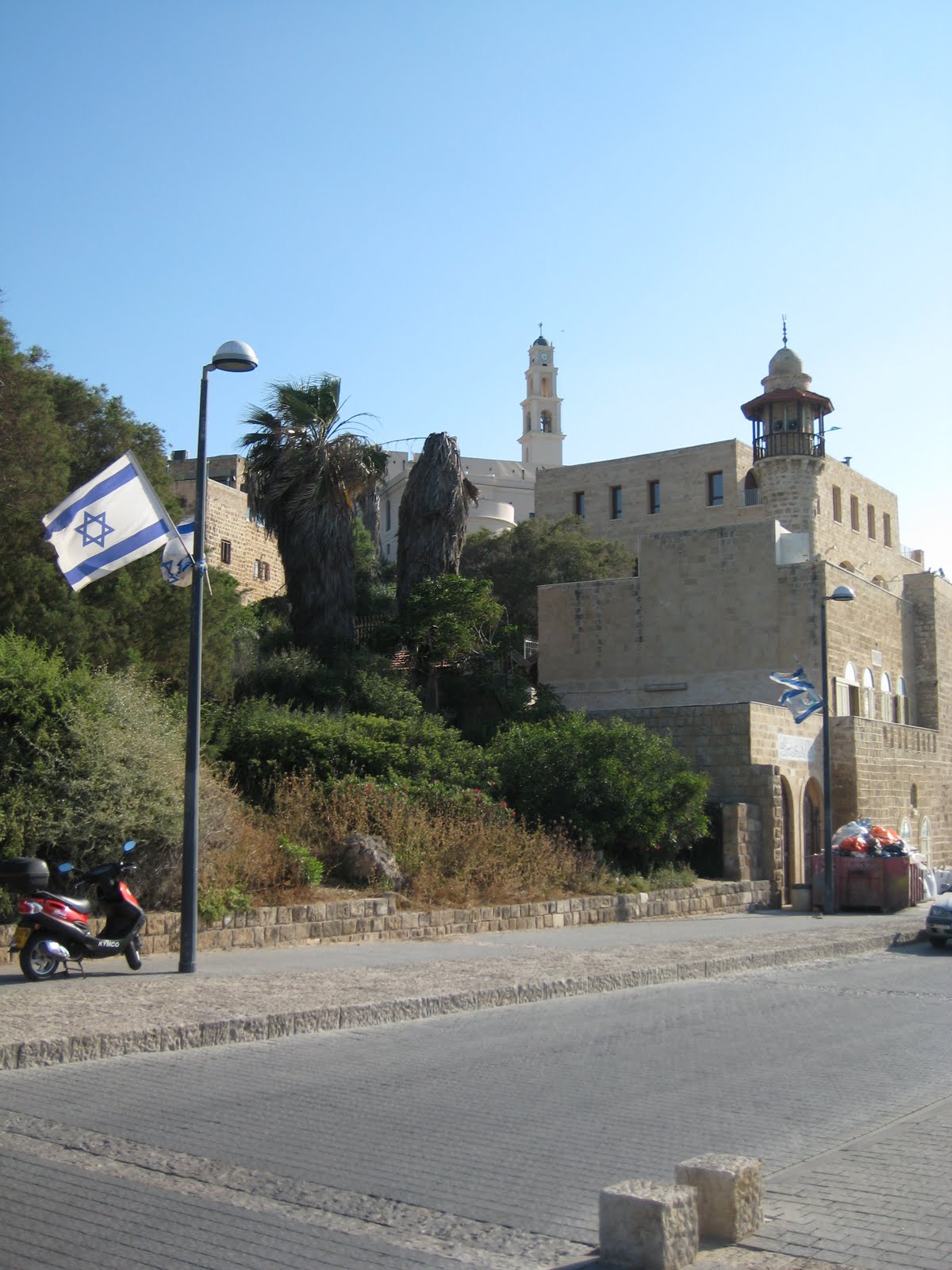
Today we went to the old part of Jaffa (Yafo). It is a beautiful city, neighbored by Tel Aviv (and actually the two are combined today), off the coast of the Mediterranean. I thought Jaffa would be a good topic for a post.

Archaeologists have found evidence that Jaffa existed as a port 4,000 years ago, and they served Egyptian and Phoenician sailors at sea. The word jaffa means beautiful. Historians believe Jaffa is the only port city which has been uninterruptedly inhabited through it’s entire time as a city.

Bibical account lists cedars from Lebanon coming to Jerusalem through Jaffa. Many people have passed through Jaffa; It was occasionally held by Philistia, and it became a Hebrew territory after the Babylonian Captivity. During the Crusades, Richard the Lion Heart took the city. Napoleon also visited the city. The city was a point of entry for many pilgrims until the 20th Century.

We visited the old part of Jaffa today, and were able to walk around and see some beautiful places.For more historical information, check out this site. Enjoy the pictures I took!


I went to use my camera when I landed in Israel, and my trusted camera which has been on several trips with me was broken! Thank goodness my dad brought his smaller camera with him in addition to his other camera. I am also thankful for the zoom power of the little camera! The first picture at the top of my post was taken from the beach in Tel Aviv, a couple miles away.

Saturday, May 28, 2011

Graduation

Fail.

Readers, I am quite sorry for the long absence. After Spring Break it took all my motivation to finish the year, so I had to make cuts in certain places, mainly my blog.

It is not that there wasn’t interesting history happening during my absence. There is one event May 13th I saved to blog about this year. Little would I realize that would be the day before my graduation, and I would be so busy I didn’t even make it to my computer for more than a 10 minute interval.

However, the next day, May 14, 2011, was an important day for me; I graduated and was able to enjoy the four years of work I put into my two majors.

May 13th I was watching my roommate graduate and saw there was a history of the academic regalia in the Colorado State Commencement book. In the spirit of graduation, I was curious what the history was behind graduation.

In the Commencement book it says the academic costume dates back to the 13th century, serving the functions of distinguishing academic rank and keeping the wearer warm. In the days of King Henry VIII of England, Oxford and Cambridge began prescribing a definite academic dress.

The Baccalaureate Ceremony (the level I have no achieved) dates back to 1432 when the first ceremony was awarded at Oxford University.

The baccalaureate was regarded as being only a preliminary step to the mastership. Following the awarding of the baccalaureate came a period of studies known as the quadrivium. After studying subjects including arithmetic, geometry, music, astronomy, Hebrew, Greek, philosophy and history the Master of Arts was awarded.

The cap worn today used to be a hood, which is believed to date back from Celtic Groups. The Druid priests work capes with hoods, which symbolized their superiority and higher intelligence. The tassel on the cap today is a color representing the college the degree is received from. When looking at hood worn, it is the most distinctive and its length and shape indicate whether the degree is a master’s or doctorate. The lining displays the official colors of the university granting the degree and the velvet trim indicates the field of study.

For all my music friends, “Pomp and Circumstance” was composed by Sir Edward Elgar and was first performed on October 19, 1901.

And now that I’ve graduated, it’s time for reality to set in. I wore my hat, received my diploma frame (I’m waiting for my diploma to be mailed to me), and have moved back home. Time to find a job and get on with my life. But first, time for some fun.

This summer I am fortunate enough to be traveling back to Israel. I will be participating in an archaeological dig for five weeks, and will be traveling with my family for two. The idea is to blog about my experience and sites I’ve seen. And I am going to try my hardest to make that happen.

So until next time in Israel, Happy History!

Thursday, March 17, 2011

Nobody Expects... the Spanish Inquisition!


My Egyptian Cat’s post was a hit! I heard from several people (many who I did not realize read my blog) that they liked my latest post. This places a significant burden on me for this post, a burden I have been contemplating for several weeks now about how to fill. And I feel the only way to live up to this is to blog about something I find funny.

My last “Ides of March” post was not expected or planned in advance, so I hope that was good too. I thought it was a timely post for this week while I’m on spring break.

Monty Python is a show that ran in Great Britain. Monty Python gave us “Monty Python and the Holy Grail” and many endless quotable jokes from that movie. But Monty Python was more than that movie; it was also a comedy show. In this show there is one particular episode that I have liked the best, and that was one titled: “The Spanish Inquisition.”


I cannot do the comedic genius justice in one simple paragraph, neither can it be done in 50 pages (nor do I think you would really want to read that much of me rambling). I leave you this link to give you the gist of their genius, and rather turn to their inaccuracies (which I hope are blatantly obvious from my Youtube link) and seek to bring the Spanish Inquisition to life for you in historical terms here. Oh, please view this link at some point if you don’t know what I’m talking about. You won’t be disappointed… I hope.

T o maintain Catholic orthodoxy in their kingdom Ferdinand and Isabella established the Spanish Inquisition in 1478. Until it was abolished in 1834 the Spanish Inquisition was under the direct control of the Spanish Monarchy. However, the Inquisition was not a new idea; it was originally created through a papal bull issued by Pope Lucious III in 1184 as a way to combat Albigensian heresy in southern France.

So how did the Spanish Inquisition become imported into Spain? The name does suggest this Inquisition took place in Spain after all.

Since its invasion in 711 C.E. most of Spain was under the control of the Moors, or Muslims. It wasn’t until the Moors were defeated in 1492 that Spain returned to Christian control.

Before this point the country yielded a multi-religious society made up of Catholics, Jews and Muslims. For a while the religions were able to coexist peacefully. However (as with most of Europe) eventually there was a massive spread of anti-Semitism resulting in the massive conversion of Jews.

Conversion for Jews allowed them to escape persecution and obtain entry into many offices and posts prohibited to Jews through regulations.

After the fall of Granada Ferdinand and Isabella produced a decree ordering the expulsion of Jews from all their kingdoms. Jews were given the choice to be baptized or leaving the country. The number of Jews who left the country is not known. Many communities of Spanish Jews were established across Europe, North Africa and in the Ottoman Empire.

Those who did remain joined a group of converses, those who said they had converted, but continued to practice Judaism in private. Continuing to practice put these people at risk of being denounced. Since the number of baptisms during this time was so high (some estimates are as high as 40,000) it is not difficult to believe some were insincere.

Jews were not the only ones targeted; Muslims living is Spain were also forced to convert. In the same way as the Jews many of these converted Muslims kept their religion and were known as moriscos. At first they were ignored by the inquisition however in the second half of the century moriscos became targeted (although not as harshly as Jews were).

The Spanish Inquisition also worked actively to prevent heretical ideas spreading in Spain by producing “Indexes” of prohibited books. These lists included many great works of Spanish literature and religious writers.

Heresy was not the only offense targeted. There were people of old and new Christian religions targeted, people suspected of witchcraft, verbal offenses including sexual morality to behavior of the clergy and homosexuality.

There were several steps to the Inquisition. First was the Edict of Grace, which followed the Sunday mass. The inquisitor would read the edict, which explained possible heresies. The congregation was asked to come to tribunals of the Inquisition. This step was called such because all the self-incriminated who presented themselves within a period of grace (about a month) was offered the possibility of reconciliation with the Church without sever punishment. Over time the Edicts of Grace was substituted by the Edicts of Faith; it made not offer of painless reconciliation.

Defendants had no way of knowing the identity of the accuser. After a denunciation the case was examined by conflicadores. Their job was to determine if heresy was involved, followed by a detention of the accused. Many were actually detained in preventative custody, which could last up to two years. Property was confiscated and many were not even informed about the accusations levied against them. Some prisoners died in these prisons.

The trial consisted of a series of hearings where both the denouncers and defendant gave testimony. Interrogation was done in the presence of the Notary of the Sacreto, who meticulously wrote down the words of the accused. To defend himself the accused had two possibilities to find favorable witness or to demonstrate the witness was not trustworthy.

There were five possible results of the trial. The defendant could be acquitted. The process could be suspended, the defendant could be penanced, the defendant could be reconciled (jailed and property confiscated) or more seriously relaxation could occur.

It is estimated (take with a grain of salt) within the first ten years 2,000 people were burned at the stake and 15,000 were reconciled.

Needless to say there were no “Comfy Chairs” for those who experienced the real Spanish Inquisition (seriously, click the link if you haven’t!)

As always, I have to ask you to subscribe to my blog if you read my normally. Or like me on Facebook if you’re liking through there. I always like hearing feedback from people, so let me know if you want me to tackle some other topic, or even if you want to stump me with a historical question.

Have a great weekend everyone, and as always… happy history!

Tuesday, March 15, 2011

The Ides of March


This is not going to be my only post this week. In fact, this is not my planned post. But when I saw this today I thought I’d blog about it as well.

“Caesar: Who is it in the press that calls me?
I hear a tongue shriller than all the music
Cry “Caesar!” Speak. Caesar is turn’d to hear.

Soothsayer: Beware the ides of March

Caesar: What man is that?

Brutus: A soothsayer bids you beware the ides of March.”

Thanks to Shakespeare we all are aware of the quote “Beware the Ides of March” yet I was still interested to find the history e-mail about the Ides in my inbox this morning.

The Ides specifically signify the lunar pattern, a system installed by Caesar himself after his visit to Alexandria. The Ides of March fell on the same holiday as Lupercalia, an Ancient Roman religious holiday. There had been parties in the city for days before the Ides.

Perhaps Caesar should have bid the warning; a plot was underway for his murder. The Romans hated the idea of a King, or anyone who was acting as a King since the last king was expelled in 509 B.C.E. Rome had functioned as a republic with senators ruling as a group over the people.

While Caesar never became a “king” he seemed to be a dictator and pushed his power as far as it would go. He had his image placed on coins, a practice not previously done. He also planned to go to war in the west.

The morning of March 15 Caesar was killed senators and people he thought were close friends. The Ides live in history through Shakespeare and imagination.