Monday, August 27, 2012

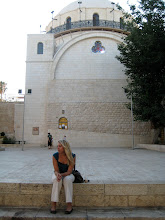
Independence Hall


I have the greatest job; I work for Interweave and am a Marketing Assistant for the Jewelry Group. This is awesome because I do make jewelry, so I’ve been looking at this company for several years. It is also perfect because I still work with the magazines.

Regardless, I got to go on my first business trip, and that was to Philadelphia. When I heard about the location of this trip, I kept thinking about the Founding Fathers, and History!!!! I knew I wanted to try and make it to Independence Hall, and we did.

As the park ranger said, this is the most important room, in the most important building, in the most important square mile in America.

The Founding Fathers stood in Independence Hall twice. First to declare independence from England, and then to write the U.S. Constitution; they debated, they argued, they compromised, and ultimately the succeeded in creating a country that was the first democratic country in history.

We all know the story; in the coming weeks I’m going to tell of some facts I did not know.


Friday, August 17, 2012

Olympic Glory


I don’t think there is any doubt that Michael Phelps is a truly great athlete. With his metal wins in London this year, he has become the most decorated Olympian in history to date. This title has been unchallenged for over 48 years.

With this great honor, the name Larisa Latynina was mentioned often. She, until this summer, she was the most decorated Olympian in history. This made me wonder, who is Larisa Latynia, and what were her medals in?

Latynina was a gymnast for the Soviet Union, which makes this metal count even more impressive in my mind. I couldn’t even get past the first year in gymnastics; something about swinging on bars didn’t really sit well with 5-year-old me. But I digress... Born in Ukraine, Laynia began her career in ballet. At the age of 19 she moved to Kiev for college and continue her training. After debuting in 1954, she went to the 1956 Olympics in Melbourne to win gold in all around, team, floor and vault, a silver on uneven bars and bronze in the now discontinued portable apparatus.

At the 1960 World Championships, Latynina was four months pregnant. But she still won five out of six titles which is really impressive. In the 1960 Olympics in Rome, she won gold in all around, team, and floor, took silver in balance beam and uneven bars, and bronze in vault.

In the 1964 Olympics in Tokyo, Latynina won gold in the team event and floor event, silver in all around and vault, and two bronze metals in bars and balance beam. There is the tally to 18 – unbelievable, especially in gymnastics!

Asked what she thought of Michael Phelps winning more metals, she commented that the metals she won for the Soviet Union also should count. She did coach for the Soviet Union gymnastics teams from her retirement in 1966 through 1977, and the team won gold in 1968, 1972 and 1976. This woman was another truly gifted athlete.

Monday, July 30, 2012

Five Strange Olympic Sports

I found the best article last week about the Olympics. This article picked up on five strange Olympic sports that have been held in previous games. Not only is this article a fun one to read, but it is history!

“5 Strange Olympic Sports You Won’t See at the 2012 London Games”

Personally, I would not mind turning on my TV and seeing the 200-meter swimming obstacle race held in Paris at 1900 games. How cool would that be? Or the tug-of-war, that would also be fun.

Thanks to the History Channel for both the article, and the image above.

Saturday, July 28, 2012

London Olympics


I love the Olympics! Having no athletic abilities myself, I respect and enjoy watching individuals who are driven and passionate about sports. And I love the celebration of world athletes. “Go World,” as one of my friends said.

My favorite sport to watch is actually rowing. I discovered it during the Olympics in Athens. I actually channel those rowers when I’m at the gym on the rowing machine. But I digress.

London is currently hosing its third Olympic games, the only city to have hosted this many times in history. The last time they hosted was in 1948, right after the conclusion of WWII. We are going to be hearing a lot about the 2012 London Olympics in the coming days, so I thought I would focus on those 1948 Olympics for this post.

London was originally selected as the host city for the 1944 Olympics, however the games were cancelled due to WWII. After the war, London was awarded the 1948 games, and while the country almost handed the games to the United States, decided they would use the game to restore the country.

This Olympics came to be known as the Austerity Games for many reasons. Food was still rationed from the war, and the athletes received the same rations the miners received. No new structures were built for these games; Wembley Stadium was not damaged during the war, and it was the main stadium for the games. There was also no Olympic Village, and the athletes stayed in canvas tents and structures used to house the prisoners of war.

Remarkably, 59 nations were represented with 4,104 athletes. Neither Germany nor Japan was invited to participate because of their role as aggressors in the war, and while the USSR was invited, it chose not to participate. United States won the most metals, with the United Kingdom winning the second most.

Sports at this Olympics included: basketball, boxing, canoeing, cycling, diving, equestrian, fencing, field hockey, football, gymnastics, lacrosse, modern pentathlon, rowing, sailing, shooting, swimming, water polo, weightlifting and wrestling.

I am so excited for the Olympic games this year. Each games I discover a new sport I didn’t know of before. This year, archery and badminton have caught my attention. Happy Olympics, and as always Happy History!

Wednesday, July 4, 2012

Independence

Growing up, July 4 is explained as the day America gained its independence from England. We celebrated in my neighborhood with a water fight, cult-d-sac BBQ and in the old days, fireworks and a bon fire. But it was not until much later that I started questioning what July 4 was. It was also a day that happened 442 days into the Revolutionary War. As a child learning this from my father (who himself is not a great teacher, but I digress) I was confused. Why would the Constitutional Convention wait until the middle of the war to declare independence? And why as Americans do we celebrate July 4, and not August 9, the day the Declaration was actually signed, or September 3, the day the Treaty of Paris was signed as our day of independence? It didn’t quite make sense.

And I still don’t really have these answers. So it is time that I answer them. It is my way of celebrating America since every firework show in Colorado has been cancelled because of the fires.

The first shots of the Revolutionary war were fired in Concord Massachusetts on April 19, 1775. It wasn’t until the spring of 1776 that support for independence swept through the colonies. A five-person committee was established to write the declaration, although Thomas Jefferson wrote a majority of the document, drawing heavily from the philosophy of John Locke.

July 2, 1776 the Constitutional Convention voted to support Virginiaian motion for independence. On July 4, 1776, 12 of the colonies officially supported the Declaration, and after some rewording New York approved on July 19, 1776. But the Declaration was not even signed until August 9, 1776.

After I researched the history of the federal holiday, I realized that it has been celebrated in a way since 1777 when thirteen gunshots were fired in salute. In 1781, Massachusetts became the first state to recognize July 4 as a state celebration. In 1791, the first record of July 4 as Independence Day occurred. In 1870, Congress made Independence Day the day became a federal unpaid holiday, and in 1938, the day became a paid federal holiday.

After all this research I realized I don’t have an answer for why we celebrate July 4 as Independence Day. What I do know is that today is the day the Declaration of Independence was voted on, and that document serves as one of the greatest documents ever written. And, according to this article by the Wall Street Journal, in the next 100 years, other nations and people would issue 200 similar documents to the American Declaration of Independence. That is certainly something worth celebrating.

Happy Fourth of July everyone!

Friday, June 15, 2012

Spam


I don’t think it comes as a surprise when I say that I love Monty Python. My highest viewed blog post was actually the one about the Spanish Inquisition, no doubt because I mentioned Monty Python and used one of their images (the power of SEO at work).

However, I know that when a joke is overdone it can lose its charm, so I was not looking for another way to incorporate the British comedy into my blog. But last week, SPAM® and Monty Python both found me, and I learned something I just could not resist sharing.

While I was reading the book Digital Advertising by Andrew McStay last week and McStay claims the unwanted email messages were dubbed “spam” because of the Monty Python SPAM® sketch.

“Although most commonly associated with email, the expression spam also applies to internet forums, mobile, instant messaging, posting within blogs and unwanted advertisements within newsgroups. The term probably derives from a Monty Python comedy sketch where every item in a cafĂ© comes with spam (a type of tinned meat).” (McStay, Digital Advertising (England, 2010), 47.)

I have quoted Monty Python before, I have had professors who referenced Monty Python in class lectures, but I have never read someone who linked Monty Python to a term that we use daily. It was just too good not to comment further on. If you have not seen the sketch, click this link to view the short sketch yourself.

My interest was peaked so I decided to see what I could find about the history of the lunchmeat SPAM®. In all honesty I didn’t find much, which was a little disappointing. If I’ve gained anything from this post, other than an awesome random fact, it's a pressing desire to actually try SPAM®.

According to McStay, SPAM® was one of the few meats excluded from the UK food rationing policy during World War II and the years beyond. For this reason, the British people grew heartily tired of it, which is where the humor of the Monty Python sketch came from.

SPAM® was first sold in 1937 as a quality canned lunchmeat. It was the first of its kind, and by 1940, 40 million pounds of SPAM® had been sold. During WWII Hormel Foods provided 15 million cans of the luncheon meat to the troops every week and over time SPAM® lunchmeat became an essential item in the soldiers’ diets.

As marketers began exploiting email and the Internet, the word spam became synonymous with unwanted advertising messages. SPAM® fought the use of its name, but eventually dismissed the trademark hearing and required that writers simply use their trademark when referring to their lunchmeat so readers could tell the difference.

Who would have thought Monty Python would play such an important role in our everyday vocabulary? As always, happy history!

Sunday, April 15, 2012

April 15 - Titanic and the Unsinkable


I think I would be the worst historical blogger if I forgot to blog about the R.M.S. Titanic today. This morning at 2 a.m. marked the 100 anniversary of the disaster, and besides the movie coming back to theatres in 3D, there have been a plethora of articles already written on the subject this year to get people ready for the event.

I feel most people know about the Titanic, the mistakes that led to the sinking and loss of life. So instead, I’m going to bring the event back to one person who happened to survive the Titanic, a person with local Denver ties.

I am talking about the iconic Mrs. Margaret (Maggie) Brown.

I took two hours today to make the trip to see the Molly Brown House museum. Her old house has been restored to the way it looked during the time Margaret was living there. Because I am me, and I love history, my friends and I went on the Titanic tour, a tour that incorporated Margaret’s life in Denver in with the story of Titanic. It was absolutely fantastic, and it was a wonderful way to spend a Sunday. It also accomplished exactly what I wanted: it forced me to think about Titanic.

Margaret Brown was born in 1867 to Irish immigrants in Missouri, and was not born wealthy. When she was a teenager, she moved to Leadville, Colorado, and it was here she met her future husband James Joseph Brown. Nicknamed J.J. he was a self-educated, and after a brief courtship they married. Margaret was 19 and J.J. was 32. Margaret always said she would marry for money, but she married J.J. for love.

The Browns were married in 1886 and had two children. It wasn’t until later when J.J. was able to use his engineering skills to a benefit. He was responsible for finding the ore in the Liggle Jonny Mine, and was awarded 12,500 shares of stock.

The family relocated to Denver where they were able to buy a new house, which is now the Molly Brown House Museum. It was one of the first in Denver to have electricity, central heating and water through the house. Unfortunately, Margaret and J.J.’s marriage did not withstand time, and the couple was separated shortly after they moved. Margaret and J.J. had two children, Lawrence Palmer Brown and Catherine Ellen Brown.

Margaret took her new wealth and used it to try and benefit society. She was fluent in Russian, Italian, Spanish and French, and traveled through Europe.

Margaret was traveling in Egypt before she broke from her party to return to France. It was there that she heard her son’s child was ill. She booked immediate passage on the Titanic, and boarded the ship with two crates filled with Egyptian artifacts she planned to give to the Denver Museum.

In Egypt, Margaret heard from a fortuneteller that she would have a mishap at sea. While she took the warning with a grain of salt, it is amazing to realize how right the psychic was. It was not so much her actions while aboard the ship that made Margaret iconic with the Titanic, but rather her actions after. Because Margaret was schooled in so many languages, she went immediately to the surviving women from steerage to help translate for them. Margaret was responsible for helping change laws on ships, including the necessity to have enough lifeboats for every passenger, and to fill the boats completely. Margaret awarded the crew of the Carpathia special awards for the courage the had during their rescue.


Also worth mentioning is that Margaret helped establish the dumb friends league in Denver and ran for Colorado senate three times.

It was fantastic to visit the museum today, and I thoroughly enjoyed the information I received on Margaret and the Titanic. I was not allowed to take pictures inside, but I did sneak a few at the back of the house.

If you’re especially interested in the Titanic, I did find this great map of the people on the ship.

Enjoy, and as always, happy history!


This is one of the actual medals Margaret presented to the crew of the Carpathia.


This is a replica of the small Egyptian statue she was able to take in her pocket the night the Titanic sank. She later presented this to the Captain Rostron of the Carpathia.